
Maison Law Immigration Lawyers can help you with adjustment of status in California. Whenever you decide to change your immigration status, it means going through a fairly lengthy process that includes a few different steps. But what it usually results in are clarifying questions about you and your life through official requests for evidence (RFE). We’ll be there to guide you through these and the rest of the process. Set up a free consultation today.
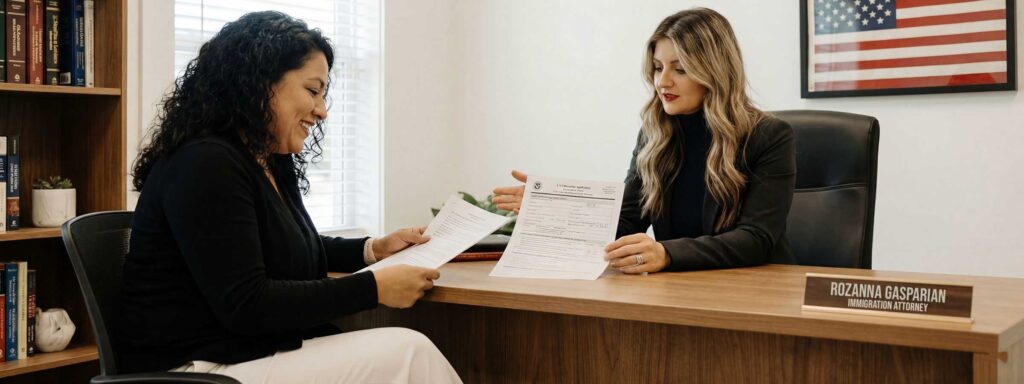
Why Would USCIS Send Me Requests For Evidence?
There’s a lot of different reasons you might want to change or update your immigration status here in California. But most of the time, it has to do with changes with your family, job, or when you’re the victim of abuse or some other crime.
But when you try to do that, USCIS is going to want more information. And to get that information, they’ll usually send you what’s called Requests for Evidence (RFE). It doesn’t mean you did anything wrong or that you need to start over, it just means that USCIS wants to fill in a gap in your application by asking for:
- A document that wasn’t included with your original application
- More proof that you qualify for the immigration benefit you’re seeking
- Additional information about your family, employment, finances, or other circumstances
- Updated records or documents
- More evidence to support something you already included in your application
- An explanation or documentation to clear up something USCIS has questions about
Every RFE is a little different, but once you get them, it’s very important to take it seriously. RFEs usually come with a deadline, but the good news is that you don’t have to try to handle it on your own.
What Should I Do When USCIS Sends Me Requests For Evidence?
Getting an RFE from USCIS can feel a little stressful. But remember, it’s not necessarily a bad thing. It just means USCIS is reviewing your application and needs a little bit more information from you. To that end, knowing what to do once you actually receive the RFE can make things a lot less stressful. Here’s what you should do:
- Read the RFE carefully. Start by reading the entire notice, not just the first page. USCIS should explain what information or evidence it wants, why it is requesting it, and when your response is due. Take your time with this part. You want to understand exactly what USCIS is asking for before you start gathering documents.
- Get all your documents in order. Start collecting the documents and other evidence that address each request. You may already have some of what you need, while other records may take more time to obtain. Keep everything organized as you go. You want to be able to show how the documents you’re submitting relate to the issues USCIS raised.
- Be specific. Don’t just send USCIS a stack of documents and hope they’re enough. Your response should address the specific issues USCIS identified. If the officer has a question about something in your application, make sure your response answers that question and explains how the evidence you’re providing supports your case.
- Explain anything you can’t provide. Sometimes USCIS will ask for a document you don’t have or can’t obtain. Don’t simply leave that part of the RFE unanswered. Depending on the circumstances, you may be able to provide other evidence or explain why the requested document isn’t available. The right approach will depend on what USCIS is asking for and why you can’t provide it.
- Review everything before you send it. Before sending in your response, go back through the RFE one more time. Make sure you’ve addressed every request and included the documents you’re relying on. It’s also a good idea to make sure your response is organized and that anything requiring an explanation is clearly addressed.
Once you send your RFE response, USCIS goes back to reviewing your case. The officer will look at what you sent in response to the RFE along with the rest of your application and supporting documents.
If you’ve given USCIS the information it was looking for, the officer can finish reviewing your case and make a decision. But they also may want even more evidence or information, at which point they’ll send another RFE.
For now, keep a copy of everything you sent and pay attention to anything else that comes from USCIS. And if you’re not sure you handled the RFE correctly, you don’t have to sit around wondering what happens next.
Maison Law Immigration Lawyers Can Help You With Requests For Evidence in California
Getting an RFE can be frustrating, especially if you’ve already been waiting months for USCIS to make a decision. Now you have another notice to deal with, and you may not even be sure what USCIS wants from you.
That’s where we can help. Maison Law Immigration Lawyers can review your RFE, explain what USCIS is asking for, and help you figure out what you need to send back. Set up a free consultation today and let us help your case along.
